Table of Contents
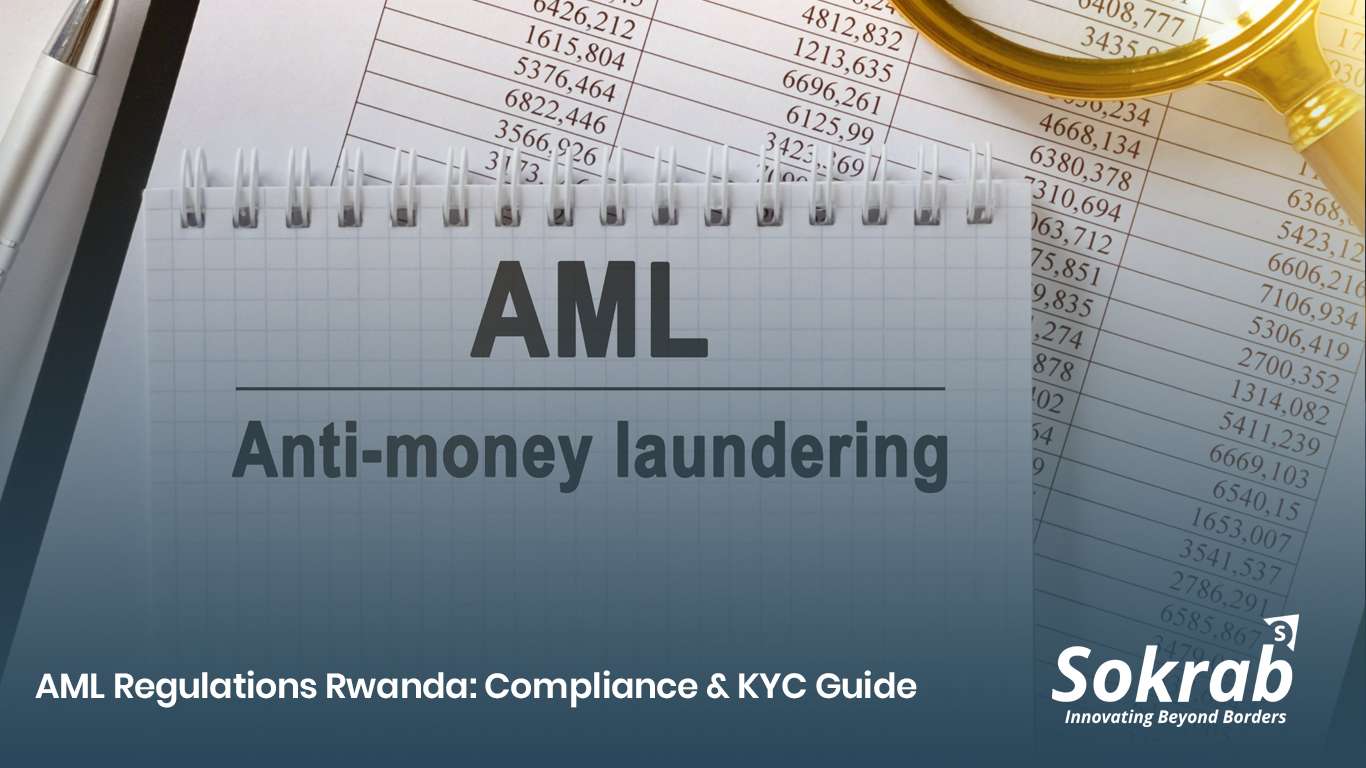
ToggleIn today’s evolving regulatory landscape, AML compliance Rwanda has become a critical requirement for businesses operating in financial services, corporate advisory, and high-risk sectors. Governments and regulators are strengthening measures to prevent illicit financial activities, making compliance not just a legal obligation but a strategic necessity.
Companies must implement robust anti money laundering Rwanda frameworks to detect, prevent, and report suspicious transactions. At the same time, effective KYC services Rwanda ensure that businesses properly identify and verify their clients, reducing exposure to financial crime risks.
At SOKRAB Advisory Rwanda, we provide tailored AML compliance services Rwanda for businesses, helping organizations meet regulatory requirements while building trust and operational resilience.
Regulatory expectations in Rwanda are increasingly aligned with global standards. Businesses are expected to maintain transparency, monitor financial transactions, and prevent misuse of their systems for illegal activities.
Regulatory oversight from institutions such as the National Bank of Rwanda plays a key role in enforcing AML requirements and ensuring financial system integrity.
Anti money laundering Rwanda frameworks are designed to identify suspicious activities and prevent illegal funds from entering the financial system.
Global standards promoted by the Financial Action Task Force guide countries like Rwanda in implementing effective AML regulations.
Businesses that align with these frameworks reduce exposure to risks and demonstrate strong corporate governance.
KYC services Rwanda (Know Your Customer) are a fundamental part of any AML strategy. They ensure that businesses verify the identity of clients before establishing financial or business relationships.
Effective KYC processes help businesses detect high-risk clients early and comply with AML compliance Rwanda regulations.
Comprehensive AML compliance services Rwanda for businesses involve a structured and strategic approach to risk management and regulatory compliance.
Designing policies, procedures, and controls aligned with Rwanda regulations.
Implementing effective identity verification and risk profiling processes.
Identifying vulnerabilities and ensuring regulatory alignment.
Establishing systems to detect and report suspicious activities.
Educating teams on compliance obligations and best practices.
At SOKRAB Advisory Rwanda, we help businesses implement scalable and compliant AML systems tailored to their operations.
Adopting strong AML compliance Rwanda practices provides both regulatory and strategic advantages.
Companies that invest in anti money laundering Rwanda frameworks position themselves as reliable and compliant partners in the market.
Many businesses delay AML implementation until required by regulators, but early adoption provides significant advantages.
Proactively implementing AML compliance services Rwanda for businesses ensures readiness and avoids regulatory challenges.
AML compliance Rwanda is no longer optional, it is a core pillar of responsible business operations. Companies that prioritize compliance not only meet regulatory requirements but also build stronger, more trustworthy organizations.
With expert support from SOKRAB Advisory Rwanda, businesses can confidently navigate compliance requirements and protect their operations from financial risks.
Ensure your business meets regulatory standards and stays protected against financial risks. Partner with SOKRAB Advisory Rwanda for expert AML compliance Rwanda, KYC services Rwanda, and anti money laundering Rwanda solutions.
Contact us today for a consultation and secure your business future.
AML compliance Rwanda refers to the regulations and processes businesses must follow to prevent money laundering and financial crimes.
KYC services Rwanda involve verifying customer identity and assessing risk before establishing business relationships.
Yes, businesses in regulated sectors must comply with AML laws enforced by authorities like the National Bank of Rwanda.
Banks, financial institutions, legal firms, real estate companies, and corporate service providers.
By adopting AML frameworks, conducting KYC checks, monitoring transactions, and working with compliance experts.
Ready to unlock the potential of your business? Reach out to us. Your success story with Sokrab Ltd awaits!
11 KG 545 St, Kigali
Monday - Friday
09 AM - 05 PM
SPN is a global professional network connecting experts and firms worldwide, fostering collaboration, partnerships, and growth across borders.