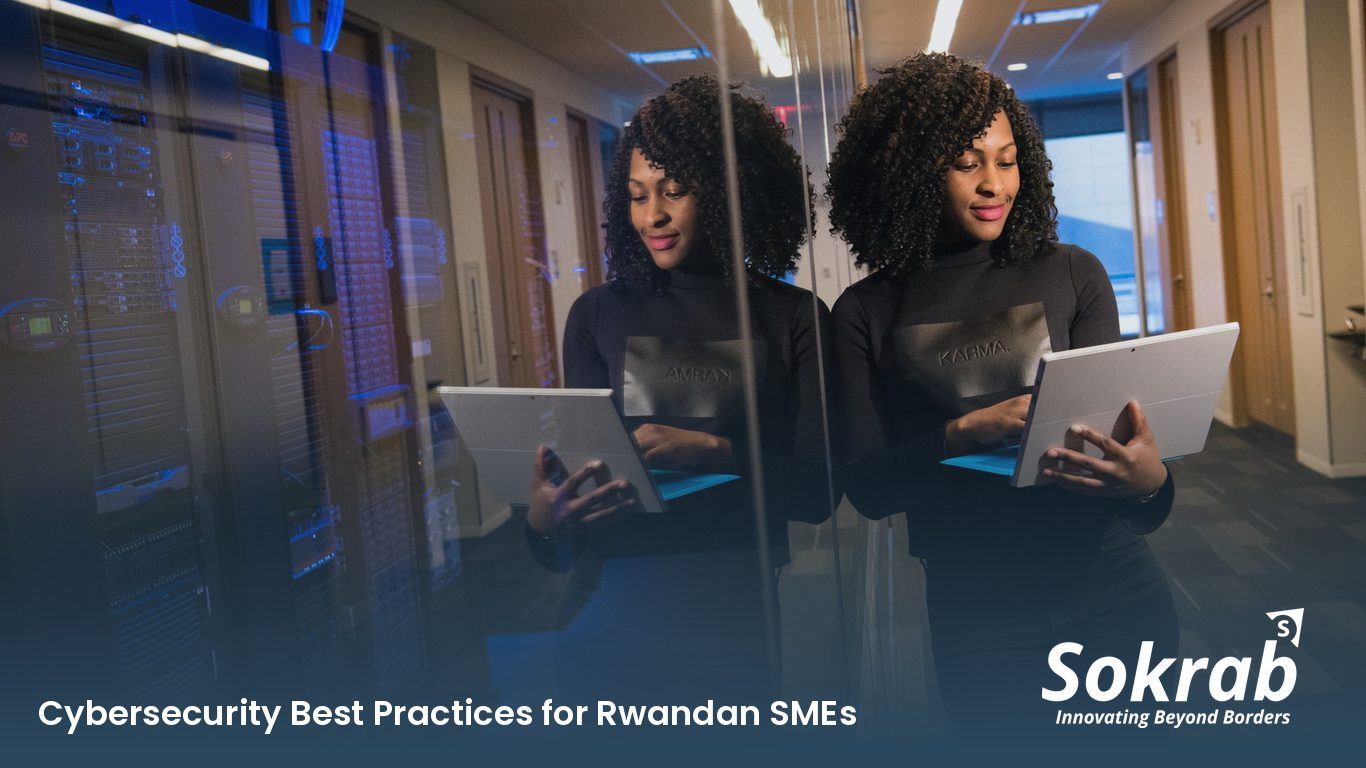
Cyber threats are no longer a big-company problem, and cybersecurity for Rwandan SMEs has become a core business risk. Small and medium businesses are attractive targets precisely because they often have valuable data but fewer defences. The good news: most incidents are preventable with a handful of disciplined practices. This guide sets out what matters most.
Strong security is a foundation of the IT services and managed IT services we deliver, protecting both your operations and your customers’ trust.
Cybersecurity for Rwandan SMEs: The Threats You Actually Face
The most common incidents are rarely exotic. They include phishing emails that trick staff into revealing passwords, ransomware that locks your files until you pay, business email compromise that redirects payments to fraudsters, and simple weak or reused passwords. Understanding that people and process — not just technology — are the front line is the first step to real protection.
Essential Protections Every Business Needs
- Strong, unique passwords and a password manager, with multi-factor authentication (MFA) on email and key accounts.
- Regular backups kept offline or in a separate cloud account, and tested so you know they restore.
- Timely updates to operating systems, applications, and antivirus — most attacks exploit known, unpatched flaws.
- Staff awareness — brief, regular training so employees recognise phishing and social engineering.
- Least-privilege access — give people only the access they need, and remove it promptly when they leave.
Protecting Customer Data
Rwanda has a legal framework for the protection of personal data and privacy, overseen by the National Cyber Security Authority (NCSA). Businesses that collect customer information have a duty to handle it responsibly — securing it, using it only for legitimate purposes, and being able to demonstrate reasonable safeguards. Good data practices are both a legal obligation and a competitive advantage.
Have a Plan for When Things Go Wrong
Even well-defended businesses can be hit. A simple incident response plan — who to call, how to isolate affected systems, how to restore from backup, and how to communicate — turns a potential crisis into a manageable event. Knowing your recovery steps in advance dramatically reduces downtime and cost.
Building Security on a Budget
- Start with the essentials: MFA, backups, updates, and staff awareness — high impact, low cost.
- Use reputable cloud services that include strong security by default.
- Consider managed IT services so monitoring and protection are handled by specialists.
Frequently Asked Questions
Are small businesses really targeted by cyberattacks?
Yes. SMEs are frequent targets because they hold valuable data but often have weaker defences. Most attacks are opportunistic and preventable.
What is the single most effective protection?
Enabling multi-factor authentication on email and key accounts stops a large share of account-takeover attacks. Reliable backups are a close second.
Does Rwanda have data protection rules?
Yes. Rwanda has a personal data protection framework overseen by the NCSA, and businesses must handle customer data responsibly.
How Sokrab Advisory Helps
We assess your risks, put the essential protections in place, train your team, and can monitor your systems through our managed IT services. Talk to our advisory team or contact us to strengthen your defences.